It’s About Time to Launch the Quick Brown Fox Again… Isn’t It?
January 21–February 20, 2022
Opening — January 20 at 18:00
All-Russian Decorative Art Museum
Delegatskaya st., 3
Moscow, Russia
The museum is a longstanding partner of the Creative Union of Artists of Russia in art projects. The All-Russian Decorative Art Museum is the only specialized museum devoted to collecting, preserving and studying works of decorative and folk art and design, not so much as objects of material culture but primarily as objects of art and art history.
With the support of CYLAND MediaArtLab
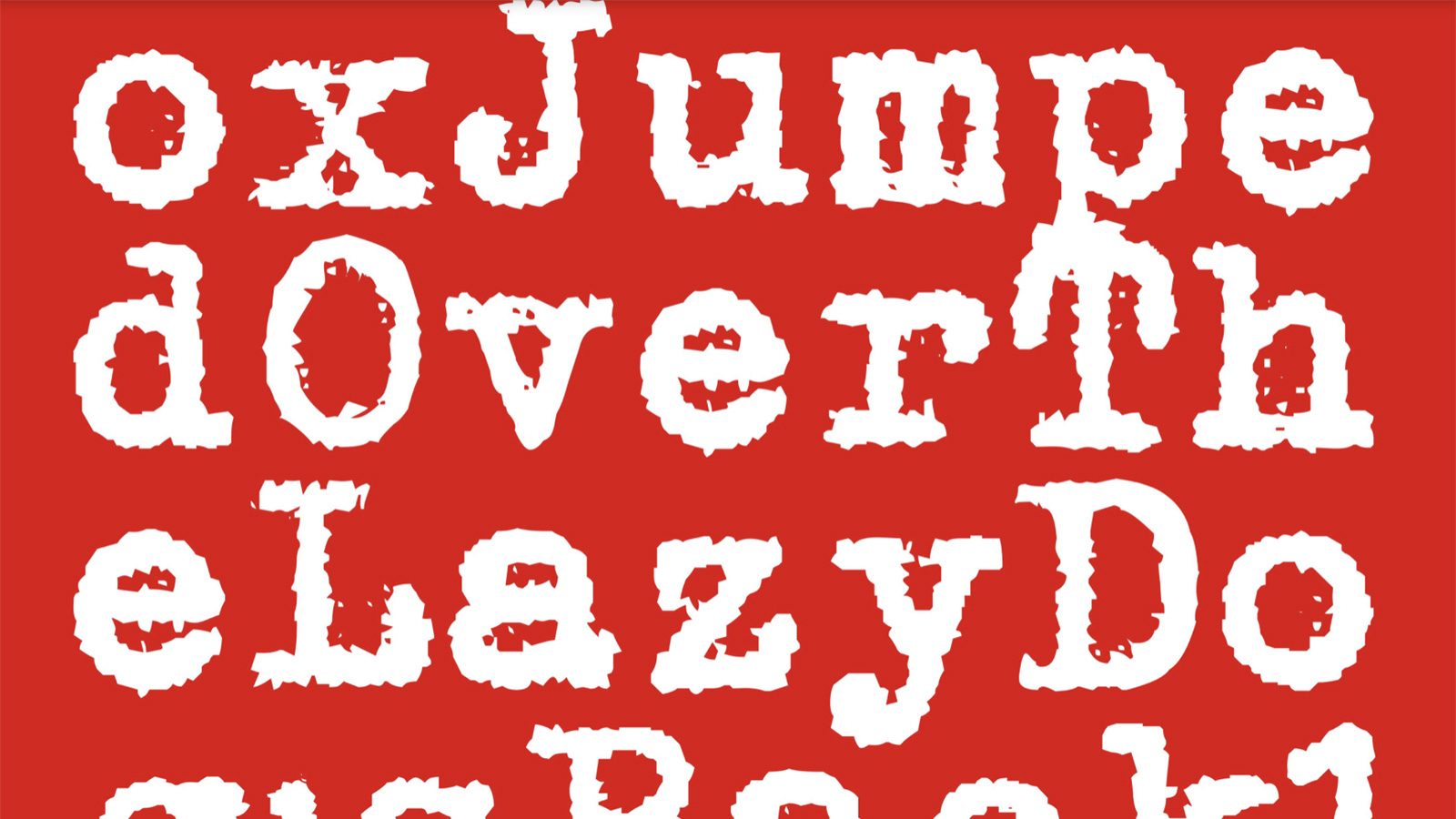
On August 30, 1963, Washington sent the first text message to Moscow, which read: “The quick brown fox jumped over the lazy dog’s back 1234567890”. What is it about, and is there a hidden meaning in it? No, this was the phrase used to test all letters of the alphabet. It is the most famous pangram in English, the shortest sentence in which all the 26 letters of the English alphabet and the letters of Latin writing as well as Arabic numerals are used. It was commonly used for touch-typing practice, testing typewriters and computer keyboards, displaying examples of fonts, and any other applications involving text where the use of all letters in the alphabet is needed. It was also common for testing the teletype services, a procedure known as “foxing”. This phrase is used to test all the keys on the device in order to avoid mistakes and misunderstandings in message texts.
This was the first direct contact between the USA and the USSR, which was supposed to prevent the possibility of a nuclear conflict. Then a military clash was avoided.
Since January 23, 2020, the hands of the Doomsday Clock show 23:58:20, leaving us only 100 seconds. On January 20, 2022, another decision on the location of the clock hands is expected. Based on the analysis of the atmosphere of relations between the great powers on the planet Earth, the arrows are unlikely to remain in place.
The Doomsday Clock and the annual suspense of counting down the seconds until the hands change position on the dial were chosen as a distinctive metaphorical symbol of the exhibition opening. The opening ceremony will include an online broadcast in which scientists from the Bulletin of the Atomic Scientists will announce the position of the hands for this year. As the exhibition curators note, “regardless of what the clock hands show, art remains the principal instrument of international integration. The language of art is universal, as it unites peoples and countries and thereby counterbalances the metaphorical assessment of the risk of our world’s destruction”.
The art project is bringing together 30 projects (15 projects from Russia and 15 projects from the USA) by American and Russian artists practicing different media including paintings, drawings, prints, sculpture, photography, video, new media and interactive installations who are interested in the above-proposed topic; evoking a wide range of responses to the contemporary political, cultural and historical context and social environment. In these projects, the art communities of the two countries reflect on global problems.
The American side is represented by outstanding practitioners of multimedia and conceptual art. According to curator Natalia Kolodzei, “it is important to reveal how artists of different generations approach ecology, space exploration, society, self-identification, concern for the world and contemporary social communication through their creative vision”.
Ellen K. Levy’s multimedia installation “Conversation at a Nuclear Plant” interprets dilemmas associated with dual-use technologies; transmedia artist Carla Gannis juxtaposes animated symbols in the video “Another Day Another Doom”. The theme of tolerance is presented by artist Yevgeniy Fiks through the project “Washington-Moscow (Security Risk Diptychs)”. In “Color Code”, Vitaly Komar explores the origins of Russian-American relations through the correspondence of Thomas Jefferson and Alexander I. In “Moonwalk”, Clea T. Waite analyzes humanity’s relationship with the Moon and its consequences during the Cold War. Anne Spalter and The Josh Craig reflect on control over the creative process in a video based on numerous international airport control towers. In her installation Be 59. Stay Cool., Irina Danilova calls for peaceful relations to be maintained at a comfortable temperature, while Anna Frants emphasizes the importance of human relationships in the installation “Peck of Salt”. Danielle Siembieda and Raphael Arar invite viewers to transform, in real time, the contextual and semantic meanings embedded in image-based memes.
The curator of American projects is Natalia Kolodzei, executive director of the Kolodzei Art Foundation, honorary member of the Russian Academy of Arts. The curators of Russian projects are Ivan Kolesnikov and Sergei Denisov. They pay particular attention to digital technologies and video art.
In his work “Chess”, Konstantin Khudyakov demonstrates how any move triggers apocalyptic events… Photographic artist Serge Golovach presents “Chandelier. Bolshoi Theatre”, constructing an allusion to the “Iron Curtain” through volume, folds and tension. The project features not only well-known, established artists but also young artists who have already made their mark, such as Victor Ponomarenko and Sergei Dorokhov. A distinct strand within the exhibition’s overall context is the special project “Ice Age” by the experimental creative workshops of the Creative Union of Artists of Russia, led by Evgeny Semyonov, which brings together 25 Russian artists.
Organizers:
Creative Union of Artists of Russia, with the support of the Ministry of Culture of the Russian Federation and the Kolodzei Art Foundation USA
Project partners:
Russian Academy of Arts, S. G. Stroganov Moscow State Academy of Arts and Industry, All-Russian Decorative Art Museum, CYLAND MediaArtLab
Project director: Konstantin Khudyakov
Project coordinator: Eleonora Zakharzhevskaya
Artists
USA / Ellen K. Levy, Yevgeniy Fiks, Anne Spalter, The Josh Craig, Anna Frants in collaboration with CYLAND MediaArtLab, Danielle Siembieda, Raphael Arar, Vitaly Komar, Carla Gannis, Olga Lamm, Irina Danilova, Julian Montague, Patricia Olynyk, Adam Hogan, Laura Stayton, Clea T. Waite, Helga Pogatschar, Asya Reznikov, Yuliya Lanina, Jose Martinez.
Russia / Ivan Kolesnikov, Sergei Denisov, Viktor Loukin, Valeriy Korchagin, Mikhail Pogarsky, Sergei Dorokhov, Vladimir Chaika, Victor Ponomarenko, Evgeny Semyonov, Serge Golovach, Alexander Lishnevsky, Julia Winter, Annushka Broshe, Andrei Karpov, Konstantin Batynkov, Alexander Zakharov, Vladimir Kotov, Konstantin Khudyakov & Art Multi-touch, Natalie Lamanova.